
How to find the parts of your tutorial people don’t understand
Use repeated questions in your comments to find an unclear step and decide what to explain differently.
Updated 1 November 2026
Start with one tutorial and one question
Choose a tutorial that people have asked for help following. Write down the question you want the comments to answer: “Where are people getting stuck?” Keep the review to that tutorial so you can check each question against the same instructions.
The example here is a fictional tutorial on sewing a lined tote bag. The instructions, comments, and proposed changes are demo data.
Read the comments and their replies beneath the post. Save the wording of each question about a step, with a link back to the comment. Include the replies because someone may have explained what they meant, or already received an answer.
If you have only a few comments, you can keep this in a short note. One precise question can reveal an instruction you left out; you don't need to wait for a crowd to ask it.
Keep the comments that describe the same difficulty
In the tote-bag example, three different people ask:
“Do I pull the outside fabric through the hole in the lining?”
“I’ve got two bags joined at the top. How do I get the right side out?”
“Could you show the bit between sewing around the top and the finished bag?”
Save these together under “Turning the bag right side out.” Keep each original comment alongside that heading so you can check your interpretation later.
The third person never uses the word “turn.” Read for the action they're trying to complete, including what happens immediately before and after it. A search for one term would miss some of these questions.
In Sentiment, on the Comments page, use Search comment text to look for a word from the question, such as “lining.” Replace it with “right side” for a second search. Check the selected channel, date range, and any existing filters first: those choices limit the comments you're searching. Keep your notes alongside the product as you read.
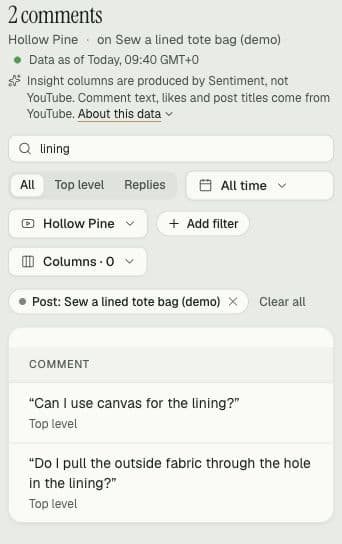
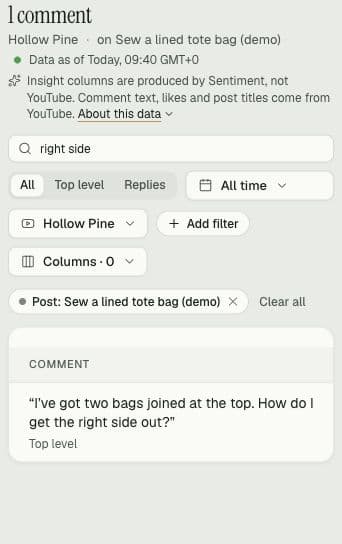
A question about using canvas for the lining belongs in a separate note about materials. It shares a word with the first question, but asks for a different answer. If one person explains their problem in several replies, keep those replies together as one person's account.
Check the questions against what you showed
Return to the part of the tutorial the comments describe. Read the written instructions and watch the demonstration, including the cut between steps.
In the demo tutorial, the instruction says:
“Leave a gap in the lining so you can turn the bag right side out.”
The creator points to the gap. The video then cuts from stitching to an already turned bag. The movement all three commenters ask about is missing from the footage.

Write down the gap as specifically as you can: “Show how the joined bag passes through the opening in the lining.”
Check whether the explanation already appears elsewhere in the post. If it does, see whether people can find it at the point where they need it. A step buried in the description may need a reference in the demonstration.
Choose the clarification that fits the gap
For the tote bag, film the turning action without a cut. Begin with the joined bag and the opening visible, then show the movement until both layers are right side out. Add a link to that demonstration beside the original instructions, wherever the publishing format allows.
A missing measurement could be fixed with a sentence. A movement people can't follow needs to be shown. Choose the smallest change that gives the person enough information to continue.
Keep a short record with the original comment links:
Demo review note: Three commenters asked about the step between joining the layers and the finished bag. The footage skips turning the bag. Add a continuous demonstration and link it from the original tutorial.
Those three comments support checking this step. They don't tell you how many other viewers had trouble or whether everyone needs a slower tutorial.
Ask a follow-up when you can’t locate the problem
Another demo comment says:
“Mine looks wrong.”
Leave this out of the turning-step group until you know what happened. You could reply:
“Which step were you on when it started to look different from the example?”
The answer might point to cutting, stitching, or turning. If the person doesn't respond, keep the comment unresolved. There isn't enough information to choose a correction.
Return to the questions after you make the change
Reply to the people who asked with the clarification or a link to the added demonstration. If they respond, keep their answers with your review note. A reply saying which part helped is useful evidence; silence leaves the outcome unknown.
When you next review comments on that tutorial, look for the same difficulty and check whether people mention the added explanation. If the question persists, inspect where they found the instructions and what remains unclear before making another change.
Choose one tutorial of your own. Save a question beside the instruction it refers to, and write the clarification you'd make or the follow-up you need to ask.
Look closer at your community’s questions
Use Sentiment’s comment search to find the wording you want to investigate. Read the surrounding discussion before you decide what to change.
Use Sentiment free